Menu

Documentation navigation

Scene Failure Fixtures

Every row of the degradation matrix, live: deliberately broken scenes demonstrating the motion runtime's error isolation.

These mounts are intentionally broken. They exist to demonstrate, live, the degradation guarantees from Scenes : a scene that misbehaves is that scene’s problem — the page, its layout, and its sibling scenes keep working, and the poster returns.

The browser console will show [symblix-motion] warnings on this page. That is the error isolation working as designed, not a bug.

# Author-code failures
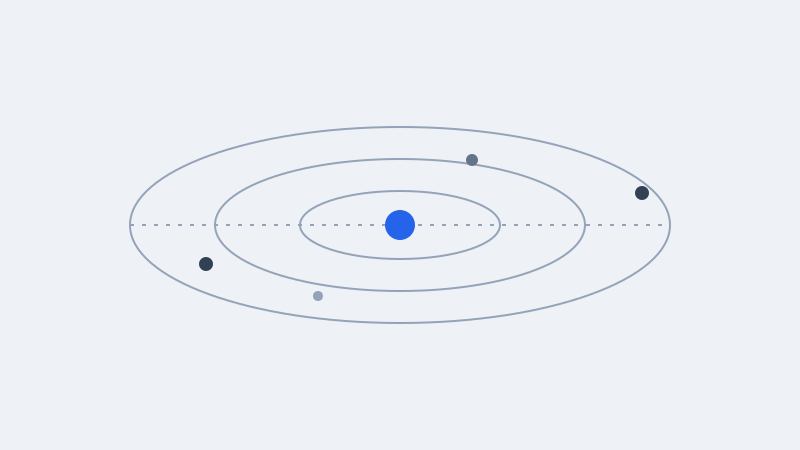
Fixture — createScene throws
This scene’s createScene throws immediately. The runtime marks the mount error, logs a warning, and leaves the poster standing.
Healthy control
The healthy control: this mount starts normally while its broken siblings fail around it — one scene’s failure never affects another.
Fixture — module throws at import
This scene’s module throws during import, before any runtime code runs. The rejected fetch lands the mount in error exactly like author-code failures do.
Fixture — bad export shape
The module’s default export is not a function. The runtime validates the shape before invoking anything.
Fixture — scene API mismatch
The module declares scene API 99; the runtime ships API 1. A declared mismatch is refused up front.

# Click-gated loads

With load="click", both the module fetch and the scene start wait for the visitor to press the button. Without JavaScript or under reduced motion, activation controls are hidden and the poster is the whole content. A click-only page also defers the heavy runtime; on this mixed page, the visible control can admit the shared runtime first.

Fixture — click-gated createScene throw
Press the button: the scene fetches, starts, and throws — one strike, and the poster returns. A broken scene is not retryable.
Click-to-load control
The working click-gated control: press the button and this scene starts normally, exactly like its visible sibling above.
On this page